


+86-0519-85282061
Current path: Home > Products&Service > Factory Planning > Intelligent Manufacturing Planning
The planning and design of intelligent logistics represent a pivotal link in smart factory construction. Unlike the traditional factory planning concept centered on products and production lines, intelligent logistics planning integrates the Internet of Things (IoT) and adopts a customer - centric approach. This enables lean flow across the entire value chain, encompassing R & D, supply chain, and production. With years of experience in automation, automated warehousing, and digital transformation, Mentechs integrates material flow, information flow, and capital flow across the entire supply chain, connecting all aspects of end-to-end value chain operations.
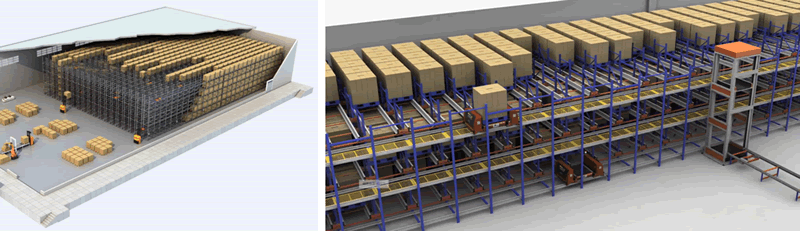
Components of Intelligent Logistics Systems
Overall Factory Logistics Layout:
Covers large - scale logistics both inside and outside the factory park.
In - Plant Workshop Logistics: A rational logistics distribution plan is formulated based on factors such as process flow, production functional zones, and logistics routes.
Intelligent Warehousing Logistics: Corresponding plans for material sorting, storage locations, inbound/outbound operations, and material storage are designed in line with the logistics distribution plan.
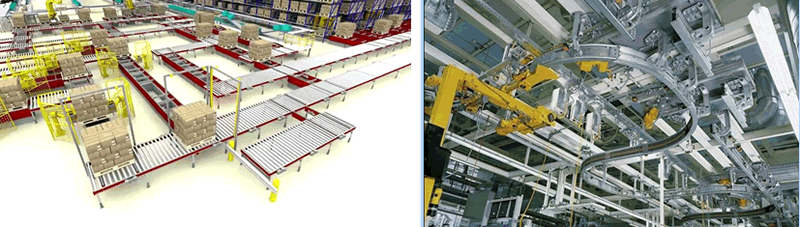
Principles of Intelligent Logistics Planning
The principles aim to ensure that materials — in the right quantity, via appropriate tools, and at the right time — are delivered to designated locations, within a short time frame and with minimal cost loss for both suppliers and customers:
Minimize Line - Side Inventory: Meet continuous production demands with low possible inventory levels.
Shorten Transportation Distances: Reduce logistics costs by minimizing component transportation. In particular, storage areas near production lines should be positioned close to workers, cutting non - value - adding time spent on walking, turning, or bending, and boosting operational efficiency.
Optimize Space Utilization: Since production is a value - adding process, allocate limited factory space to prioritize production during layout design. Line - side inventory should occupy as little space as possible, with more area dedicated to on - site production activities.
Simplify Non - Value - Adding Logistics: Logistics operations (e.g., distribution, loading/unloading, placement, unpacking, handover) do not add value. Thus, simplify or eliminate such tasks to reduce investment in logistics equipment.