


+86-0519-85282061
Current path: Home > Products&Service > Project Implementation > Machine Vision
Based on Mentechs's years of experience in visual measurement applications, it is applied to various high-precision measurement scenarios to inspect whether a product's dimensional tolerance range conforms to specifications, and is deployed across diverse sectors including aerospace, automotive, 3C, textile, and pharmaceutical industries.
What is visual measurement technology?
Visual measurement is growing increasingly popular. It leverages sensors to capture measurement images and achieves measurement through the precise mapping relationship between the image information and the geometric information within the object space. The key to high-precision measurement lies in this very precise mapping.
Why is distortion considered in visual measurement?
The traditional visual imaging model is the pinhole camera model, which ignores the influences of various errors in the optical path and represents a linear imaging relationship, so it can be directly applied in scenarios with low requirements for measurement accuracy. In an actual imaging system, due to factors such as radial distortion, tangential distortion, affine deformation, and non - orthogonal deformation, light does not propagate in a straight line. That is, for a point on an object in space, we would ideally expect it to strike the image plane along a straight line passing through the lens center. However, in reality, the light bends inside the lens; even if it still passes through the lens center, it travels along a curved path when reaching the image plane.
Perhaps our eyes cannot perceive such effects, but during measurement, even a deviation of 2 pixels may lead to a 1-mm error. Therefore, for precision measurement, it is necessary to compensate for such deviations. In this case, the image we see is a distorted one, and sometimes the unflattering appearance in photos may also result from this reason.
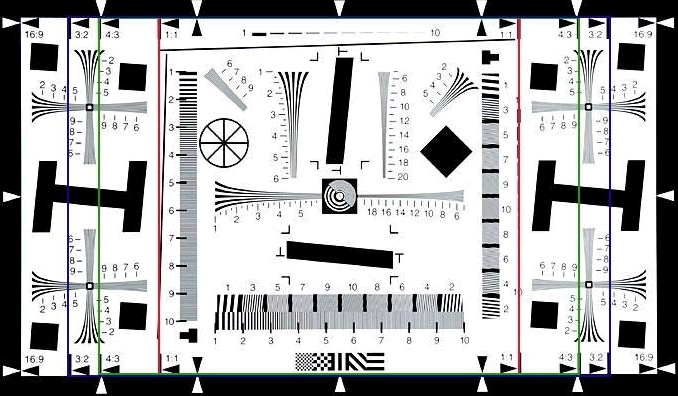
Visual measurement technology leverages images as a medium for detecting and transmitting information. It extracts valuable signals from images and derives required parameters by processing the measured images.
Rooted in machine vision, this technology integrates optoelectronics, computer science, laser technology, and image processing into a comprehensive measurement system that unites optics, mechanics, electronics, and computing. It is characterized by non-contact operation, full-field measurement, high precision, and high automation.
Instruments based on visual measurement technology can achieve intelligentization, digitization, miniaturization, networking, and multi-functionalization. They enable online detection, dynamic inspection, real-time analysis, and real-time control, featuring efficient, high-precision, and non-destructive testing capabilities—meeting the evolving demands of modern precision measurement. Currently, such technologies are widely applied in industries including industrial, military, medical and other fields, attracting substantial attention.
Numerous cutting-edge instruments developed globally using visual measurement technology exist, such as optical coordinate measuring machines (optical CMMs), AI-powered one-click measuring devices, and vision-based tool presetting gauges.
Development Trends of Visual Measurement Technology
Visual measurement technology is a promising automatic inspection technology, enabling intelligent, flexible, rapid, and low-cost detection. As research on computer vision theory continues to deepen, visual inspection will soon be widely applied across various industries. The development trends of visual measurement technology are primarily reflected in the following aspects:
Enabling Online Real-Time Detection
Visual inspection systems are predominantly applied in industrial sites and production lines. For online real-time detection, a critical step in the practical application of visual measurement is integrating the visual measurement system into the corresponding processes of the production line, ensuring that the measurement speed aligns with the production line takt.
The execution time of visual inspection largely depends on the speed of underlying image processing (such as image smoothing, filtering, and segmentation). Therefore, implementing environment-independent processing algorithms using dedicated hardware can significantly enhance image processing speed.
Enabling Intelligent Inspection
Extract visual models of parts and inspection information (including part position and orientation, camera perspective, etc.) from CAD systems, select inspection items, inspection points, and inspection paths, establish intelligent inspection plans, and control industrial robots to grasp parts and place them in appropriate positions for inspection.
Enabling High-Precision Inspection
Compared with vision systems, coordinate measuring machines (CMMs) have significant advantages in inspection accuracy and measuring space range. Therefore, CMM-based visual inspection systems have become a new trend in visual inspection technology.
Integrated CMM and visual inspection systems can utilize vision systems to quickly identify the shape of parts as well as their positions and states on the measurement platform. They enable the conversion between machine coordinate systems, part coordinate systems, and camera coordinate systems, assisting CMMs in automatically generating inspection paths and judging measurement results.
Meanwhile, in-depth research on sub-pixel positioning technology and its application in practical inspection systems can improve inspection accuracy and reduce system costs.